
SAFETY, CONNECTION, AND HOPE
Trauma and Post Traumatic Stress
Compassionate informed care to help you heal from painful experiences and reclaim a sense of safety, connection, and hope.

Trauma can change the way you experience yourself, your relationships, and the world around you. Even long after a painful experience has ended, your mind and body may continue responding as if danger is still present.
At Intrinsic Counseling and Treatment Center, we provide compassionate, trauma-informed therapy for adults struggling with PTSD, complex trauma, and the lasting effects of overwhelming life experiences.
Whether your trauma developed from childhood emotional neglect, abuse, toxic relationships, loss, violence, accidents, first responder experiences, or other painful events, healing is possible. Our goal is to help you feel safer within yourself, reconnect with your emotions, and move forward without feeling controlled by the past.
What Is PTSD?
Post-Traumatic Stress Disorder (PTSD) can develop after experiencing or witnessing traumatic events that overwhelm your sense of safety or control. Trauma affects people differently, and not everyone responds the same way to difficult experiences. Some people experience symptoms shortly after an event, while others may not recognize the effects of trauma until months or years later.
PTSD is not a sign of weakness. It is a response from the nervous system trying to protect you after experiencing distress, fear, helplessness, or chronic emotional pain.
Some people experience trauma from a single event, while others develop symptoms from repeated or long-term experiences such as childhood neglect, emotional abuse, unstable relationships, domestic violence, or ongoing stress. This is often referred to as complex trauma or C-PTSD.
Common Signs of Trauma & PTSD
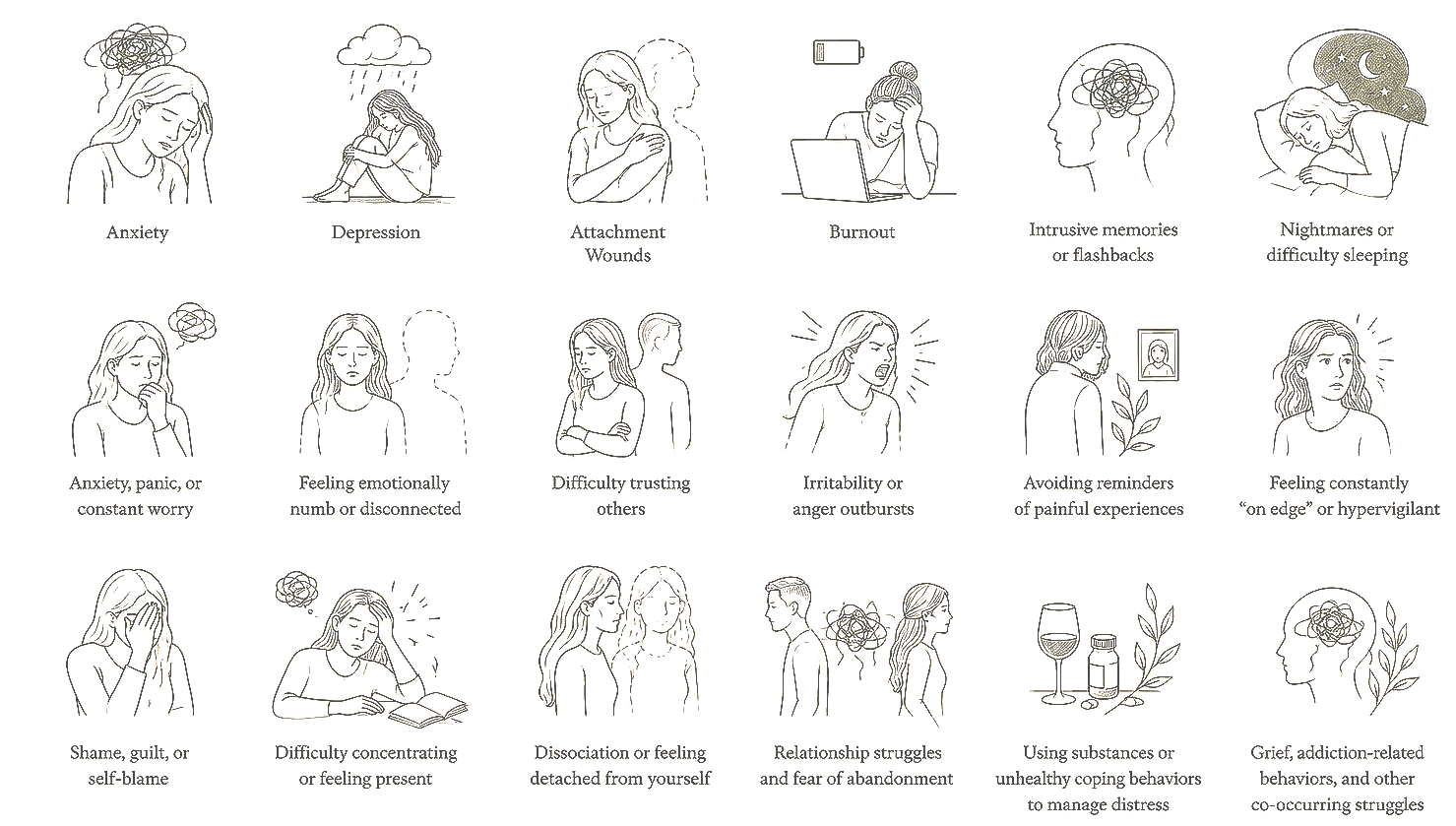
Types of Trauma We Commonly Help Treat
Abuse & Violence
Trauma related to emotional abuse, physical abuse, sexual abuse, domestic violence, spiritual or religious abuse, or coercive relationships can deeply impact a person’s nervous system and sense of safety.
Complex Trauma (C-PTSD)
Complex trauma develops from repeated or ongoing exposure to emotionally painful or unsafe experiences, often within relationships where escape or protection felt difficult or impossible. Complex trauma often impacts identity, emotional regulation, and relational safety in deep and lasting ways.
Childhood Trauma & Emotional Neglect
Early experiences can shape how you view yourself, relationships, safety, and emotional connection. Childhood trauma may continue impacting self-esteem, boundaries, emotional regulation, and attachment patterns into adulthood.
Family & Developmental Trauma
Family and developmental trauma can occur when a child grows up in environments marked by instability, inconsistency, or emotional unavailability. This may include living with a parent or family member with mental illness or substance use disorder, experiencing chaotic or unpredictable caregiving, or facing sudden separation, abandonment, or early loss. These experiences can deeply shape attachment, emotional safety, and identity development.
Relationship & Toxic Relationship Trauma
Toxic or emotionally unsafe relationships can leave lasting emotional wounds, especially when they involve manipulation, betrayal, control, or chronic invalidation. Relationships with narcissistic or emotionally abusive partners may create confusion, self-doubt, and difficulty trusting others. Healing often involves rebuilding boundaries, restoring self-trust, and creating a sense of emotional and relational safety.
Community, Cultural, and Identity-Based Trauma
Experiences such as racism, discrimination, marginalization, or exposure to unsafe community environments can create ongoing stress and emotional injury. These forms of trauma often contribute to chronic hypervigilance, emotional exhaustion, and a diminished sense of safety in the world, especially when experiences are repeated or systemic in nature.
First Responders, Law Enforcement & High-Stress Professions
Individuals in high-stress professions such as first responders and law enforcement are often exposed to repeated crisis situations and traumatic events. Over time, this ongoing exposure can contribute to emotional exhaustion, hypervigilance, burnout, and PTSD symptoms, especially when there is limited opportunity to process or recover from these experiences.
Grief & Traumatic Loss
The sudden or painful loss of a loved one can create profound emotional disruption and complicated grief responses. Traumatic loss may feel overwhelming, disorienting, or difficult to process, often impacting daily functioning, emotional stability, and one’s sense of meaning or connection.
Accidents, Medical Events, and Sudden Trauma (Single-Incident Trauma / PTSD)
Single-incident trauma, also known as acute trauma, occurs after a sudden overwhelming event that disrupts a person’s sense of safety and normalcy. This may include car accidents, severe illness or medical emergencies, sudden traumatic loss, witnessing violence or disaster, military or first-responder incidents, or childbirth trauma. These experiences can lead to post-traumatic stress responses, including intrusive memories, anxiety, and heightened nervous system activation.
Natural Disasters & Environmental Trauma
Natural disasters such as tornadoes, floods, fires, or earthquakes can result in both physical and emotional loss, including displacement, injury, or disruption of safety and stability. These events often impact a person’s sense of security and predictability in the world and may lead to ongoing stress responses even after the immediate danger has passed.
Our Approach to Trauma Therapy
At Intrinsic Counseling and Treatment Center, we understand that trauma therapy is not about forcing you to relive painful experiences before you are ready. Healing begins with building safety, trust, emotional awareness, and nervous system regulation.
Our approach is collaborative, compassionate, and individualized. We work at a pace that feels supportive while helping you better understand the ways trauma may still be affecting your life today.
We integrate evidence-based trauma approaches including:
EMDR Therapy (Eye Movement Desensitization and Reprocessing)
Helps process traumatic memories and reduce emotional distress connected to past experiences.
Internal Family Systems (IFS)
Helps individuals understand protective patterns, emotional wounds, and internal conflicts with greater compassion and clarity.
Attachment-Focused Therapy
Explores how past relationships and emotional experiences continue impacting present-day connection, trust, and self-worth.
Trauma-Informed Cognitive Behavioral Therapy (CBT)
Helps identify patterns of thinking, emotional responses, and behaviors connected to trauma and chronic stress.
Our therapy approach focuses not only on symptom relief, but also on helping clients reconnect with themselves, build emotional resilience, and create healthier patterns moving forward.
What Trauma Therapy Can Help With
Trauma therapy may help you:
Feel more emotionally grounded and present
Reduce flashbacks, panic, and hypervigilance
Improve emotional regulation and coping skills
Build healthier relationships and boundaries
Process unresolved grief and painful memories
Reduce shame, guilt, and self-criticism
Understand patterns connected to attachment wounds
Feel safer and more connected within yourself
Develop healthier ways to manage stress and emotions
Begin Trauma Therapy
You do not have to continue carrying the weight of trauma alone. Healing is possible, and support is available.
If you are ready to begin PTSD or trauma therapy, reach out to Intrinsic Counseling and Treatment Center to schedule an appointment.